
Most people outside Canada encounter the CFL the same way they find out about anything unfamiliar — by accident. They catch a Grey Cup broadcast, notice the field looks bigger, count an extra player on each side, and wonder why the goalposts are at the wrong end. Then they look it up. Fans who follow multiple sports in parallel — flipping between a football broadcast and something like Magneticslots during halftime — tend to pick up these differences faster than most, because they are already comfortable moving between formats that follow different rules. The CFL is exactly that: a different format. Not a lesser one. A different one, built from different choices.
Those choices go back a long way. Canadian and American football diverged in the late 1800s when Harvard introduced a fourth down into the game after playing McGill University in 1874. McGill played three downs. Harvard liked it better with four. The Americans kept the change. Canada did not. That single decision set off a chain of rule differences that still define both games today.
The Field Changes Everything
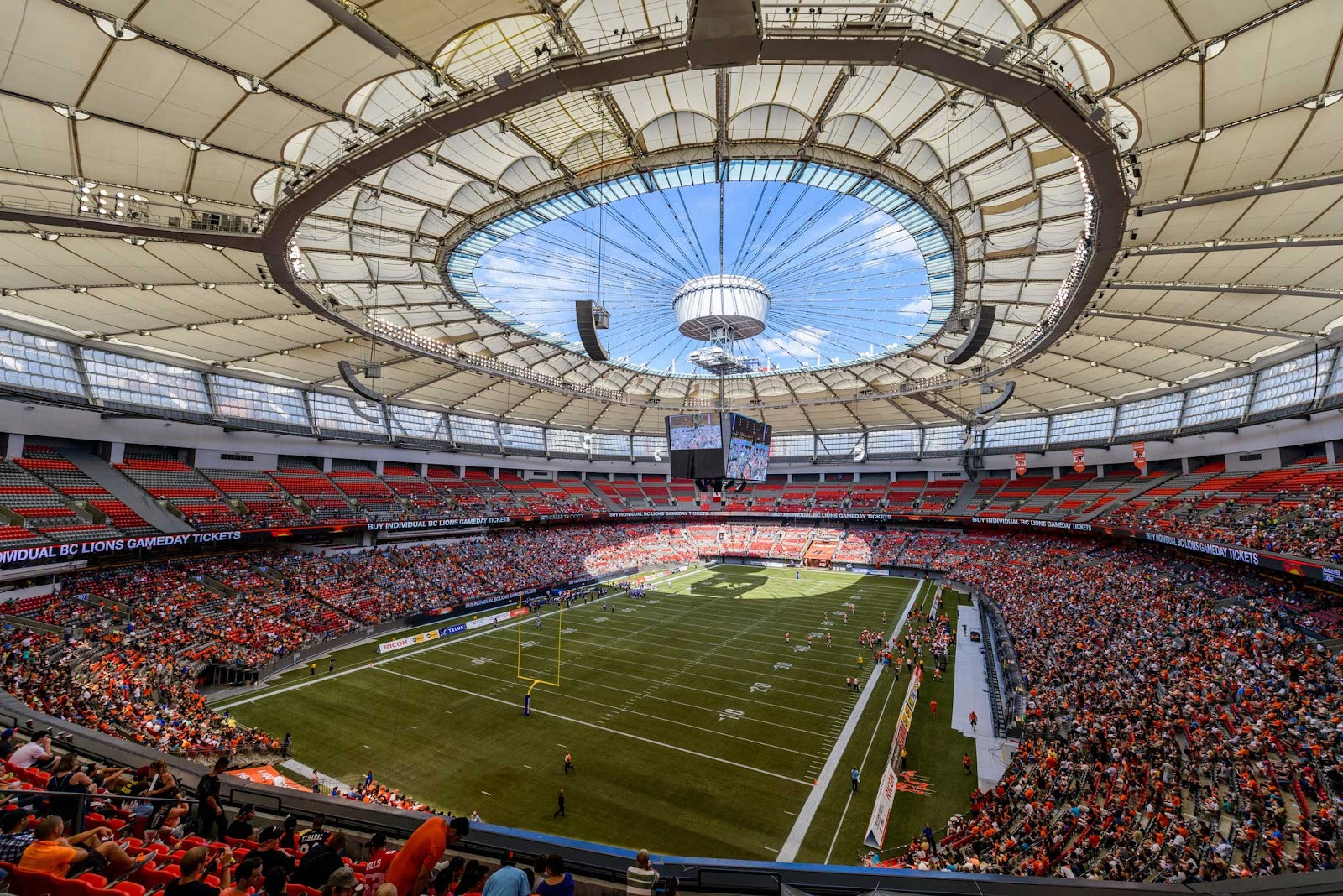
Start with the most obvious thing: the CFL field is bigger. Not slightly bigger. Meaningfully bigger. The playing surface runs 110 yards long and 65 yards wide, compared to 100 yards by 53.3 yards in the NFL. The end zones stretch 20 yards deep in the CFL versus 10 yards in the NFL. That extra space is not decorative. It changes who gets hired, how offenses are designed, and what kind of plays actually work.
A wider field means defensive backs need more ground speed to cover it. Offensive linemen need better lateral mobility than raw bulk. Receivers have more room to run routes without getting jammed at the line. The game rewards different physical tools than the NFL does, which is part of why players regularly move between the two leagues in both directions and require real adjustment time when they do.
The goalposts are another thing new viewers notice immediately. In the CFL they sit at the front of the end zone — right on the goal line. In the NFL they stand at the back. This placement affects kicking strategy throughout the game, not just on obvious field goal attempts.
Three Downs, and What That Forces
Three downs instead of four is the rule that changes the game most completely. With one fewer attempt to gain ten yards, offenses cannot afford to run the ball twice and hope for the best. Short-yardage running plays that buy time in the NFL become dead weight in the CFL. Teams pass more because they have to.
In 2022, CFL teams averaged more passing yards per game than their NFL counterparts. The three-down structure pushes that number up every season. It also changes how defenses are built — if you know the offense is going to throw on second down nearly every time, you stop designing your roster around stopping the run and start building your secondary.
The effect on game pace is real too. Drives are shorter on average. Punting happens earlier. There are more possessions per game, which means more scoring opportunities and tighter late-game situations where a single series can decide everything.
Twelve Players and Unlimited Motion
Each CFL team puts 12 players on the field rather than 11. The extra player typically adds a slot receiver or an additional defensive back, depending on the situation. On offense, that means one more potential pass target. On defense, it means one more coverage option on a field that already demands speed over size.
The motion rules push this further. In the NFL, one offensive player can move before the snap, and that movement must be lateral or backward. In the CFL, every player except the quarterback can be in motion, and receivers can run toward the line of scrimmage before the ball is snapped. They cannot cross the line before the snap, but they can time their movement so they hit the line of scrimmage at full speed the moment the ball moves.
That running start is not minor. A receiver crossing the line of scrimmage at speed has a genuine advantage over a defender standing still at the snap. It makes the CFL passing game look different from the NFL version — more lateral movement, quicker releases, more complexity at the snap — because the rules encourage exactly that.
Key structural differences at a glance:
| Rule | CFL | NFL |
| Field length (incl. end zones) | 150 yards | 120 yards |
| Field width | 65 yards | 53.3 yards |
| End zone depth | 20 yards | 10 yards |
| Players per side | 12 | 11 |
| Downs per possession | 3 | 4 |
| Play clock | 20 seconds (35 from 2026) | 40 seconds |
| Offensive motion | All players except QB | One player, lateral only |
| Goalpost location | Goal line (front) | Back of end zone |
| Fair catch on punts | No (5-yard buffer instead) | Yes |
The Rouge: A Point That Makes Sense in Context
Nothing confuses first-time CFL viewers more than the single point, officially called a rouge. Here is how it works: if a team kicks a field goal and misses, or punts the ball, and the receiving team fails to return it out of their own end zone, the kicking team scores one point. The ball then goes to the other team at their own 35-yard line.
This sounds strange until you think about what it does to the game. It eliminates deliberate touchbacks. A team cannot just let a punt land in the end zone and have the drive start at the 20. They have to make a decision — return it or give up the point. That creates action on every kick. It also means a team trailing by one late in the game cannot simply concede a punt. They have to get out of their own end zone, which adds pressure to every kicking situation in the fourth quarter.
The rouge rewards good kicking and punishing passive receiving. It is a rule designed around the specific geometry of the CFL game, and it works.
Why the CFL Format Holds Together
Taken individually, each of these differences looks like a quirk. Taken together, they form a consistent design. The large field rewards speed. Three downs reward passing. Unlimited motion rewards precision timing. The play clock keeps the game moving. The rouge rewards aggressive kicking.
None of these rules exist in isolation. They reinforce each other. Change one and you change the balance of everything else. The CFL has run this system, with adjustments at the margins, for decades. The game it produces is high-scoring, fast, and built around athleticism rather than size.
A few things that define the CFL game in practice:
- More passing yards per game on average than the NFL, driven directly by the three-down structure
- Faster game pace — the 20-second play clock means more snaps per game than in the NFL
- Punt coverage and return units carry more strategic weight because there is no fair catch option
- Defensive backs and receivers face larger distances to cover, which changes the physical profile of both positions
- Late-game situations are more frequent and more tense because the rouge eliminates passive end zone plays
The CFL is not trying to be the NFL with fewer resources. It runs a different game, built on rules that were set in place before American football standardized its own format, and those rules produce something genuinely distinct. If you have only watched one version of professional football, watching the other for the first time takes about a quarter to recalibrate. After that, the logic of the CFL becomes clear on its own terms.