
The landscape of the Canadian Football League (CFL) has undergone a massive structural evolution. Historically anchored by community-owned non-profits and local benefactors, the league modernised its ownership landscape to attract media conglomerates, real estate moguls, and venture capitalists. With the league expanding its defined revenue model—boosting the salary cap past $6.28 million—financial stability and private capital have become paramount. Below is an analytical breakdown of the wealthiest CFL franchise owners, their business backgrounds, and how their wealth influences overall league stability.
Key Financial Overview: Top CFL Franchise Owners Ranking
Rank | Franchise | Owner / Primary Entity | Estimated Net Worth | Industry / Wealth Source |
|---|---|---|---|---|
1 | Toronto Argonauts | Maple Leaf Sports & Entertainment (MLSE) | ~$13.0 Billion | Sports & Entertainment Conglomerate (Rogers, Bell, Kilmer) |
2 | Calgary Stampeders | N. Murray Edwards (Calgary Sports and Entertainment) | ~$4.8 Billion | Oil & Gas, Mining, Asset Management |
3 | Montreal Alouettes | Pierre Karl Péladeau | ~$3.7 Billion | Telecommunications, Media (Quebecor) |
4 | Ottawa Redblacks | Roger Greenberg (Ottawa Sports and Entertainment Group) | ~$1.5 Billion | Real Estate Development (Minto Group) |
5 | BC Lions | Amar Doman | ~$1.0 Billion | Building Materials, Restructuring (Futura Corporation) |
6 | Edmonton Elks | Deb Thompson | ~$700 Million | Construction, Private Capital |
7 | Hamilton Tiger-Cats | Bob Young (Hamilton Sports Group) | ~$500 Million | Technology, Software (Red Hat) |
N/A | Winnipeg Blue Bombers | Winnipeg Football Club | Community Owned | Non-Profit Corporation |
N/A | Saskatchewan Roughriders | Saskatchewan Roughriders Football Club | Community Owned | Public Shareholder Model |
Analysis of the Wealthiest CFL Owners
1. Toronto Argonauts — Maple Leaf Sports & Entertainment (MLSE)
- Estimated Enterprise / Portfolio Net Worth: ~$13.0 Billion
- Ownership Structure: Corporate Enterprise (Rogers Communications, BCE Inc., Larry Tanenbaum / Kilmer Sports)
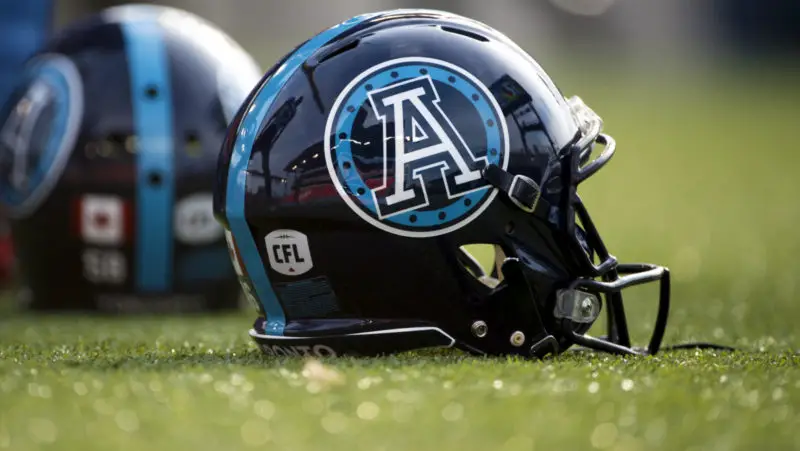
MLSE stands at the pinnacle of Canadian sports operations. When MLSE acquired the Toronto Argonauts in late 2017, it infused unprecedented corporate capital into North America’s oldest professional football franchise. Backed by telecommunications giants Rogers Communications and Bell Canada, alongside Kilmer Group, MLSE provides the Argonauts with unmatched cross-promotional power across national broadcasting networks, digital venues, and ticketing platforms.
2. Calgary Stampeders — N. Murray Edwards
- Estimated Net Worth: ~$4.8 Billion
- Entity: Calgary Sports and Entertainment Corporation (CSEC)
As the controlling owner of Canadian Natural Resources Limited (CNRL), N. Murray Edwards made his fortune in resource extraction, energy development, and corporate turnarounds. Through CSEC—which also owns the NHL’s Calgary Flames—Edwards brings industrial-grade capital to the Stampeders. His financial backing has provided long-term stadium stability and robust commercial leverage within Alberta's corporate sector.
3. Montreal Alouettes — Pierre Karl Péladeau
- Estimated Net Worth: ~$3.7 Billion
- Background: Telecommunications & Media
Pierre Karl Péladeau (PKP), President and CEO of Quebecor Inc., purchased the Montreal Alouettes to stabilize a franchise that had briefly defaulted to league control. Péladeau’s wealth in media infrastructure allowed the Alouettes to capture renewed corporate sponsorships and media exposure in Quebec. For fans exploring competitive dynamics and odds, platforms like Spins of glory highlight the broader commercial ecosystems driving sports and gaming entertainment nationwide.
4. Ottawa Redblacks — Roger Greenberg
- Estimated Net Worth: ~$1.5 Billion
- Entity: Ottawa Sports and Entertainment Group (OSEG)
Roger Greenberg built his wealth through the Minto Group, one of Canada’s premier real estate development firms. As the managing partner of OSEG, Greenberg orchestrated the revitalization of TD Place and Lansdowne Park, creating a sustainable urban model centered around the Redblacks franchise.
5. BC Lions — Amar Doman
- Estimated Net Worth: ~$1.0 Billion
- Company: Futura Corporation
Vancouver businessman Amar Doman acquired the BC Lions to revitalize West Coast football culture. Building his empire through building supplies, industrial distribution, and asset turnarounds, Doman has deployed targeted marketing campaigns, live entertainment events, and localized fan outreach to significantly grow game-day attendance at BC Place.
Private Capital vs. Community-Owned Models
The CFL remains a unique sports league due to its dual operational structure: corporate/private wealth operating alongside community-owned, non-profit entities.
Ownership Type | Franchises Included | Operational & Financial Features |
|---|---|---|
Private & Corporate Ownership |
|
|
Community Non-Profit Ownership |
|
|
The Community Powerhouses
Winnipeg Blue Bombers (Winnipeg Football Club): Operated as a community non-profit corporation. Winnipeg's strong local governance, stadium lease structure, and loyal fan base have made it one of the most profitable operations in the league despite lacking an individual billionaire owner.
Saskatchewan Roughriders: Utilizing a public voting share model, the Roughriders operate as a major regional brand. The franchise consistently generates top-tier merchandise revenue and national TV viewership.
The Shift in Edmonton
The historical division between private and community ownership shifted when the Edmonton Elks transitioned out of community ownership. Following private acquisition steps, ownership passed to Deb Thompson (estimated net worth ~$700M), signaling a broader trend across professional sports toward private capitalized balance sheets capable of absorbing macroeconomic shifts.
Economic Impact on the CFL
1. Rising Salary Caps and Revenue Sharing
With collective bargaining agreement (CBA) updates tying cap numbers to Defined League Revenue, wealthy owners provide the financial backstop required to expand team investments. The salary cap increasing above $6.28 million illustrates how steady private capital supports higher player compensation and operational standards.
2. Cross-Sport Asset Integration
Owners like MLSE (Maple Leafs, Raptors, TFC, Argonauts) and CSEC (Flames, Stampeders) leverage economies of scale. Shared venue management, joint corporate sponsorship packaging, and integrated ticketing technology significantly reduce per-team overhead costs while maximizing commercial yield.
Conclusion
The evolution of the CFL's ownership landscape reflects a strategic move toward long-term institutional stability. While the league's identity remains deeply rooted in community pride and historical traditions—personified by non-profit powerhouses in Saskatchewan and Winnipeg—the arrival of deep-pocketed owners like MLSE, N. Murray Edwards, and Pierre Karl Péladeau provides essential financial resilience. As revenue-sharing mechanisms mature and multi-use stadium districts continue to yield high economic returns, the balance between private mega-wealth and passionate community stewardship will remain the CFL's primary competitive asset.