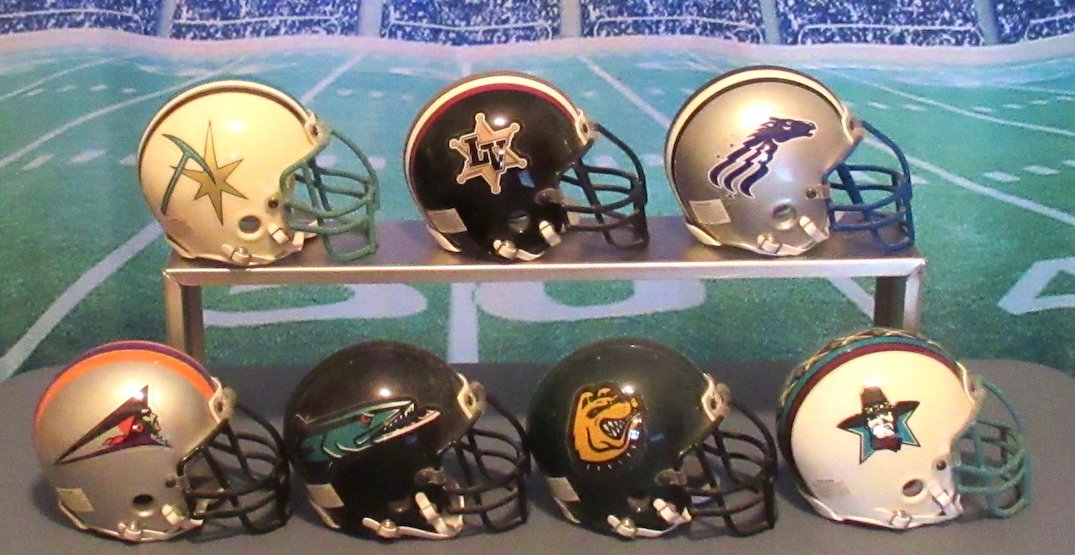
The Canadian Football League expanded into the United States from 1993 to 1995. Seven American teams in the CFL played across three seasons. Six of those teams folded. One relocated to Montreal. The experiment cost ownership groups more than $20 million in losses and ended with the CFL returning to an all-Canadian league by 1996.
Here is how the American expansion started, why it failed, and what it left behind.
Why the CFL Looked South
The CFL faced a financial crisis in the early 1990s. Every Canadian franchise except the Edmonton Eskimos had dealt with ownership issues, debt, or attendance problems in the years leading up to 1993. The Montreal Alouettes had folded twice during the 1980s. The Winnipeg Blue Bombers carried $3 million in debt. The Hamilton Tiger-Cats saw attendance drop. The Calgary Stampeders and Saskatchewan Roughriders both ran public fundraising campaigns to stay in operation.
CFL Commissioner Larry Smith saw American expansion as a way to bring in new revenue. His plan called for a league with up to 20 teams — 10 in Canada and 10 in the United States. The World League of American Football had suspended operations in 1992, and two of its former owners were ready to join the CFL.
The American Teams in the CFL: A Timeline
1993: Sacramento Goes It Alone
The Sacramento Gold Miners became the first American team in the CFL in 1993. Owner Fred Anderson had previously run the Sacramento Surge in the WLAF, where the team won the 1992 World Bowl.
The Gold Miners went 6-12 in their first season. Quarterback David Archer threw for 6,023 yards, second in the league behind Doug Flutie. Running back Mike Oliphant led the CFL in yards from scrimmage with 1,572.
Sacramento averaged 16,979 fans per game — the lowest attendance in the nine-team CFL. Reports indicated that as many as 2,000 of those tickets were given away free. The team played at Hornet Stadium on the Sacramento State campus, a facility with no permanent concessions and only portable restrooms.
The San Antonio Texans were also supposed to join the CFL in 1993. Owner Larry Benson withdrew before the season due to financial problems. Sacramento played the entire year as the only American franchise.
1994: Expansion Hits Four American Cities
Three more American teams in the CFL joined for 1994: the Baltimore Stallions, the Las Vegas Posse, and the Shreveport Pirates.
Baltimore was the success story. The Stallions averaged 37,347 fans per game in 1994. Quarterback Tracy Ham and running back Mike Pringle led the team to a 12-6 record. Baltimore reached the Grey Cup and lost to the BC Lions by three points.
Las Vegas was the opposite. The Posse finished 5-13 and averaged 8,953 fans per game. Their penultimate home game drew 2,350 people — the lowest recorded attendance in CFL history. Several hundred of those fans had traveled from Winnipeg. Owner Nick Mileti announced the team would disband before its final home game. The CFL does not allow mid-season foldings, so the league moved that game to Edmonton. The Posse practiced on a 70-yard field at the Riviera Casino. Their end zones at Sam Boyd Stadium measured only 15 yards instead of the regulation 20.
Shreveport went 3-15 in 1994, the worst record in the CFL. The Pirates averaged 17,871 fans per game in their first season. Owner Bernard Glieberman had previously run the Ottawa Rough Riders for two years before selling that franchise.
Sacramento improved to 9-8-1 in 1994 but missed the playoffs. Attendance dropped to 14,226 per game. Anderson could not negotiate a new stadium deal with local government and began looking at relocation options.
1995: The South Division and the End
The CFL created a South Division for 1995 and placed all five American teams in it. The eight Canadian teams played in the North Division.
The Gold Miners moved to San Antonio and became the Texans. Two new franchises joined: the Birmingham Barracudas and the Memphis Mad Dogs.
Baltimore went 15-3 in 1995 and won the Grey Cup 37-20 over the Calgary Stampeders. The Stallions became the first and only American team to win the CFL championship. Their .756 winning percentage over two seasons was the best start by an expansion team in North American pro sports history at the time. Attendance dropped to 30,111 per game, down from 37,347 the previous year.
San Antonio made the playoffs in 1995. Quarterback David Archer threw for 4,471 yards and 30 touchdowns. The Texans lost to Baltimore in the South Division final.
Birmingham posted a 10-8 record and drew over 30,000 fans for two home games early in the season. Attendance fell to between 6,000 and 9,000 for their final three home games once the NFL, college football, and high school football seasons started. The Barracudas made the playoffs but lost to San Antonio.
Memphis went 9-9 and averaged 13,691 fans. The Mad Dogs played at Liberty Bowl Memorial Stadium, which could not fit a regulation CFL field. The end zones were as shallow as seven yards along the sidelines instead of the standard 20. Memphis marked a yard three inches short to squeeze the field into the stadium. The team missed the playoffs.
Shreveport improved to 5-13 but saw attendance fall to 14,359 per game.
The Financial Damage
The five American teams in the CFL lost a combined $20 million to $21 million in 1995 alone. Birmingham’s losses were the highest at an estimated $10 million. San Antonio lost between $4 million and $6 million. Memphis and Shreveport each lost about $3 million. Baltimore’s losses were between $1 million and $1.5 million.
Canadian teams were not doing well either. The eight Canadian franchises averaged 22,740 fans per game in 1994, a drop of 3,000 from the previous year. That marked the start of an attendance decline across the CFL that lasted through most of the decade.
Why the American Teams in the CFL Failed
Several factors contributed to the collapse.
Field dimensions were a problem. Canadian football uses a 110-yard field that is 65 yards wide, with 20-yard end zones. Most American stadiums could not accommodate these dimensions. Teams in Las Vegas, Memphis, and other cities played on fields that were shorter, narrower, or both.
Geography worked against them. The American teams were spread across the country with no geographic concentration. Sacramento’s nearest CFL opponent was the BC Lions, over 890 miles away. The league’s original plan to place teams near the Canadian border never materialized — most American franchises ended up south of the 37th parallel.
Competition from the NFL was a factor. Birmingham, Memphis, and Sacramento all faced direct competition from NFL and college football once those seasons started. Attendance at every American franchise except Baltimore dropped when the NFL kicked off each fall.
The CFL brand did not translate. American fans were unfamiliar with three-down football, the wider field, and the 20-second play clock. The rule differences created confusion, and the league had no national U.S. television deal to build awareness.
Ownership was unstable. Las Vegas had an absentee owner based in Cleveland. Shreveport had the Gliebermans, who had already mismanaged the Ottawa Rough Riders. Sacramento’s Fred Anderson could not secure a stadium deal. The league collected $3 million expansion fees but provided little marketing support to U.S. franchises.
The Baltimore Exception
Baltimore was the one American team that worked — at least on the field. The Stallions won 27 of their 36 regular-season games over two years. Tracy Ham and Mike Pringle gave the team a foundation on offense. The city supported the franchise because it had lost the NFL’s Baltimore Colts in 1984 and had no other pro football option.
That changed in November 1995 when the Cleveland Browns announced their move to Baltimore for the 1996 NFL season. Stallions owner Jim Speros knew his team could not compete against the NFL. He relocated the franchise to Montreal, where it became the current version of the Montreal Alouettes.
With Baltimore gone, no other American team had the finances or fan support to continue. Fred Anderson folded the San Antonio Texans rather than operate as the only U.S. franchise again. By January 1996, every American team had shut down. Commissioner Larry Smith called the pullback a “retrenchment.”
What the CFL Took Away From the Experiment
The American expansion left the CFL in worse financial shape than before. The league eventually received a loan from the NFL and secured new television deals to stabilize. The nine-team Canadian format remained in place until the Ottawa Redblacks joined in 2014.
The expansion did produce one lasting legacy. The Baltimore Stallions’ move to Montreal revived the Alouettes franchise, which had been dormant since 1987. That team continues to play in the CFL today.
Anthony Calvillo, who started his career as a rookie with the Las Vegas Posse in 1994, went on to become the all-time leader in passing yards in professional football history. He spent the bulk of his career with the Montreal Alouettes.
The CFL has not placed a team in the United States since 1995. The league explored international marketing initiatives again in 2018, partnering with leagues in Mexico and Europe for player development. But no American expansion has been attempted.
For fans interested in CFL action today, BetUS CFL Betting offers lines on the current season.
American Teams in the CFL: Quick Reference
Team
Years
Record
Avg. Attendance
Sacramento Gold Miners
1993-1994
15-20-1
16,979 (1993), 14,226 (1994)
Las Vegas Posse
1994
5-13
8,953
Baltimore Stallions
1994-1995
27-9
37,347 (1994), 30,111 (1995)
Shreveport Pirates
1994-1995
8-28
17,871 (1994), 14,359 (1995)
San Antonio Texans
1995
N/A
N/A
Birmingham Barracudas
1995
10-8
17,625
Memphis Mad Dogs
1995
9-9
13,691
Mark PerryEditor
Mark Perry is the founder and editor of CFL News Hub. A dedicated and experienced football analyst, he has been providing comprehensive coverage of the sport since 2018.